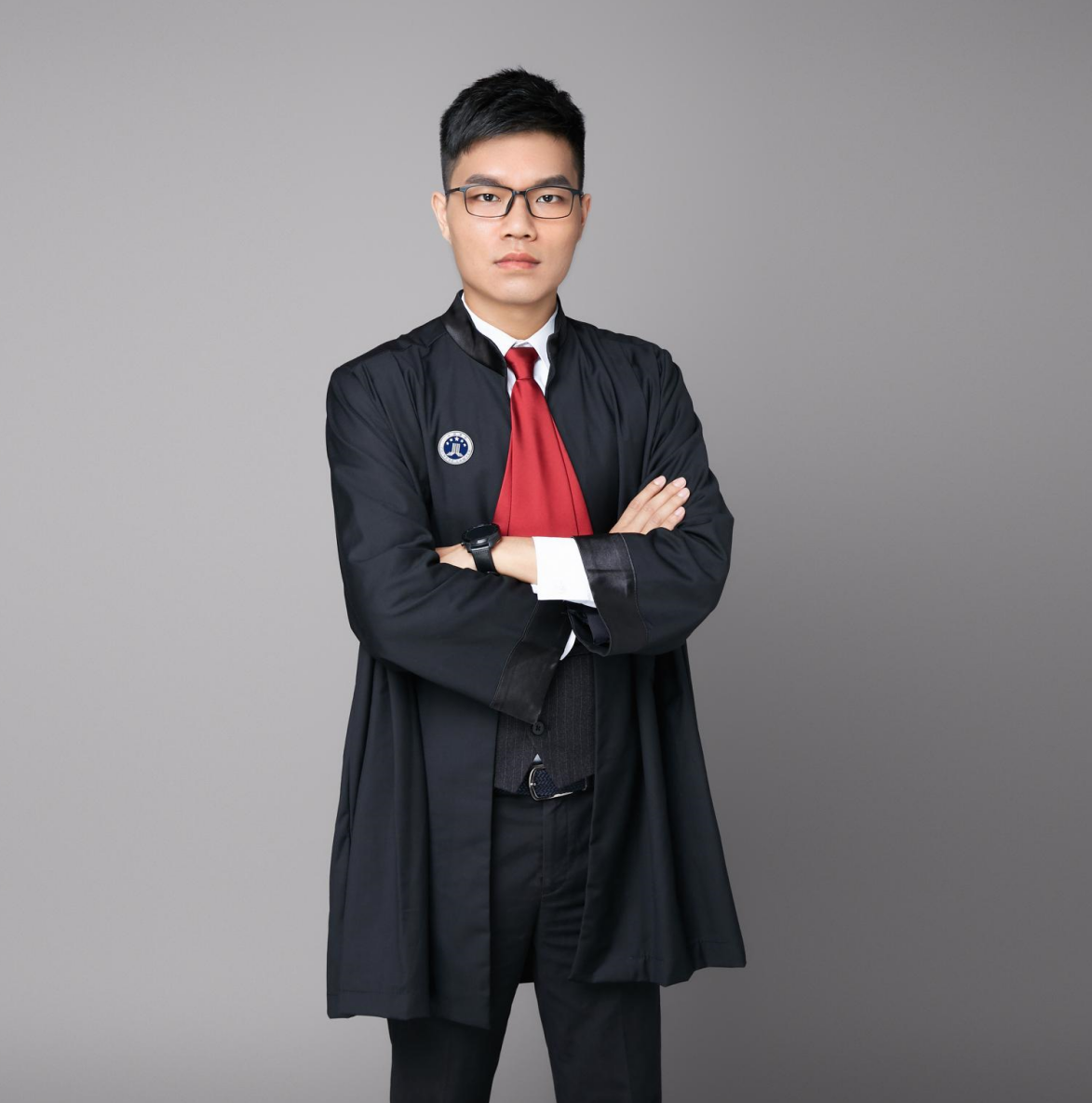
Kaijia Chen: Focused on Labor Disputes and Contract Claims in Guangzhou
Deputy Director
Practicing Certificate No.14401201810068780
Practice AreasLabor Disputes、Contract Disputes、Tort Liability、Criminal Defense

Profile
We advise on matters governed by the laws of the People's Republic of China. Kaijia Chen is Executive Deputy Director and Senior Partner of Guangdong Weifa Law Firm, and head of the firm's Civil & Commercial Law Committee.
Kaijia Chen has been named an "Outstanding Lawyer" by the firm. Since entering practice, Kaijia Chen has participated in more than a thousand litigation and non-litigation matters, achieving a series of favorable judgments and receiving commendation banners from clients on many occasions. In addition, Kaijia Chen has published academic articles in the Guangzhou Lawyers Association's thematic journal and received the Guangzhou Lawyers Association 2020 Professional Achievement Award for case handling. Practice philosophy: helping those in difficulty, fully devoted and responsible, living up to clients' trust, and striving to solve their problems. Areas of focus: labor disputes, contract disputes, tort cases, and criminal cases, with a concentration on litigation, extensive courtroom experience, and a solid theoretical foundation.
Honors
Every recognition is precious (kept permanently in the firm’s records)
Mr. Yang presented a commendation banner inscribed "Guardian of justice, the people’s good lawyer"
Mr. Huang presented a commendation banner inscribed "Diligent and responsible, profound in professional virtue"
Mr. Shen presented a commendation banner inscribed "Standing firm for righteousness, discerning right from wrong to safeguard dignity"
Mr. Huang presented a commendation banner inscribed "Efficient and professional case handling, warm and attentive service"
Mr. Lai presented a commendation banner inscribed "Professional defense, guarding lives, guardian of the law, defending fairness"
Mr. Wang presented a commendation banner inscribed "Highly experienced, consummately skilled, elite legal professional, gold-medal lawyer"
Ms. He presented a commendation banner inscribed "Upholding social justice, demonstrating the authority of the law"
Ms. Chen presented a commendation banner inscribed "Protecting the people’s rights, demonstrating fairness and justice"
……
Public Activities
Nearly forty original articles published on major media platforms, all drawn from personally handled cases
On the evidentiary points for the validity of civil juristic acts performed by persons with limited civil capacity under the age of eighteen.
A worker is assaulted during work — what counts as a work injury!
A worker who has reached the statutory retirement age is injured at work — can it be recognized as a work injury?
The victim dies after more than 9 months of treatment — does the party responsible for the accident commit the crime of causing traffic casualties?
The case of an employee who died suddenly from overwork — corporate tort
The case of recovering damages for breach of contract by a Kuaishou live-streaming artiste
When spouses cannot agree on child custody at divorce, can the court rule against granting the divorce?
An employee’s mere promise to waive pension insurance contributions is not enough! The employer must still pay severance!
An employee injured within one month of joining left after the suspension-with-pay period and claimed double wage differentials — the employer had the right to refuse
During unlawful subcontracting of a project, a worker hired by an individual is injured — after the subcontractor bears work-injury compensation liability, can it recover from the individual?
Goods are lost after being handed to a courier for transport — is the risk of loss borne by the seller or the buyer?
During labor subcontracting, the contractor’s improper employment practices caused a worker to develop an occupational disease — the contract-issuing unit that bears supervisory fault shall bear joint and several compensation liability
During work-injury determination, an employer that fails to present evidence and respond as required after notice from the Human Resources and Social Security Bureau will bear significantly adverse legal consequences.
The government issued a demolition-notice order without fully considering the party’s homestead rights — the court ruled to revoke it
A worker suffered a work injury within one month of joining and did not return to work; the company accordingly did not sign a written labor contract — should the company pay the worker double wage differentials?
A worker proposes to conclude an open-ended labor contract — can the employer refuse to renew on generic grounds of work needs?
A contract performance bond may, under certain conditions, be offset against rent upon termination of the contract
A case tells you: accumulating an employee’s multiple disciplinary violations and then directly dismissing the employee — the court does not approve!
The employer argued that part of the wages owed to the employee was reimbursement in nature and not fixed, and refused to pay severance — the court does not support it!
The housing authority deliberately fabricated reasons to refuse to accept an application to revoke an erroneous property registration in order to obstruct the administrative counterpart — did the court rule it unlawful?
For the crime of dangerous driving, the procuratorate did not recommend a suspended sentence when prosecuting — after the defense, a suspended sentence was imposed!
A worker with an occupational disease has nowhere to claim compensation? A case tells you what to do!
A small-scale cooperative business faced obstruction and harassment at every turn — the breaching party ultimately could not escape defeat!
The pandemic is no excuse — delaying the release of a co-produced film shall bear liability for breach of contract!
A big store bullying customers — the order deposit cannot be offset against subsequent payments? The court found this violated general trading practice!
An employee was disciplined for not working overtime — was that reasonable and lawful?
Kaijia Chen secured decisions not to prosecute in two consecutive cases!
Denying an employment relationship with an employee on trumped-up grounds — the law does not allow it!
The seller refuses to cooperate in land title confirmation — a real case tells you there is still a way!
A woman who married out of the village cannot receive dividends? The court judgment says otherwise
Facing an employer’s unlawful termination of the employment relationship, workers must both dare to say no and know how to fight back!
Assault not treated as "criminal"? Don’t worry — sue in civil court for compensation!
Partners opening a shop stir up trouble — a case tells you how to defend your rights!
Injured while working on a construction site — how should the wage base in work-injury compensation be claimed to your advantage?
Does moving one’s household registration in and out for study reasons cause loss of collective economic organization membership? A court judgment tells you how it is determined (with a compilation of the lawyer’s practice insights on cases involving "women who married out of the village" and knowledge sharing, part two)
Suffering from an occupational disease — can the worker terminate the employment relationship with the employer and claim severance pay?
Case Library
(I) Civil and Commercial Cases
1. Contract disputes
(1) Ship partnership dispute (Supreme People's Court):
He v. Ouyang and others — a ship partnership dispute that proceeded from first instance at the Guangzhou Maritime Court, through second instance at the Guangdong Provincial Higher People's Court, to retrial at the Supreme People's Court, where it was concluded after a hearing arranged by the Supreme People's Court. It was the firm's first case to reach the Supreme People's Court and be granted a hearing because of its complexity.
(2) Artiste performance contract disputes:
A Foshan media company v. the artiste Liao — a contract dispute in which the company successfully recovered RMB 1 million in compensation from the artiste. For this case, Kaijia Chen received the Guangzhou Lawyers Association 2020 Professional Achievement Award for case handling.
Source: Foshan Nanhai District People's Court (2019) Yue 0605 Min Chu No. 16426 Civil Judgment; Foshan Intermediate People's Court (2020) Yue 06 Min Zhong No. 8604 Civil Judgment
(3) Investment contract disputes:
Chen v. a Beijing film and television culture company — an investment contract dispute in which the film company failed for a long time to deliver the promised movie-screening returns after signing the contract. In the end, the court not only ordered the defendant to refund the full investment, but also ordered payment of interest on the occupied funds, liquidated damages, and legal fees, fully supporting the claims. [Source: Beijing Haidian District People’s Court (2021) Jing 0108 Min Chu No. 54736 Civil Judgment]
(4) Service contract disputes
A Guangzhou network technology company ("Company A") v. a Chengdu media company — a service contract dispute. Company A signed a Kuaishou Live-Streaming Promotion Contract with the defendant for product promotion, but the defendant failed to provide the agreed services and then refused to return the service fee it held; Company A communicated repeatedly to no avail. The person in charge of Company A turned to Kaijia Chen for help. After understanding the case, Kaijia Chen determined the approach of claiming contract termination, a refund, and liquidated damages, and filed the lawsuit. Through representation, the court ordered the defendant company to return the service fee and pay liquidated damages.
Source: Guangzhou Tianhe District People's Court (2020) Yue 0106 Min Chu No. 20151 Civil Judgment
(5) Partnership agreement disputes:
Liu v. Lin — a partnership dispute, "a partnership gone sour." While running a fruit shop together, Liu was frequently insulted and ostracized by Lin, and was even asked to leave the shop; the two lost the basis for continuing the partnership. Kaijia Chen assessed the situation and determined the approach, successively collecting and fixing evidence through demand letters and notices. After two hearings and four rounds of evidence submission, the court found that the defendant had breached the contract and must pay Liu the partnership proceeds.
Source: Guangzhou Huadu District People's Court (2022) Yue 0114 Min Chu No. 721 Civil Judgment
(6) Sales contract disputes:
① Xi v. Li — a case in which a homestead sales contract was invalid. Because homestead houses cannot be transferred between villagers and persons from outside the village, Xi, upon realizing the relevant legal provisions, decided to sue to recover the loss. Through representation by Kaijia Chen, Xi recovered the full purchase price with the lawyer’s assistance.
Source: Guangzhou Huangpu District People's Court (2019) Yue 0112 Min Chu No. 10416 Civil Judgment
② An Inner Mongolia cattle company, Guangzhou branch ("Company A") v. a Shenzhen supermarket company ("Company B") — a sales contract dispute. Company A was a well-known beef product brand supplier, and Company B was also widely known for its regional supermarket business; the two cooperated and signed a purchase-and-sale contract. Later, due to changes in market supply and demand and internal operating factors, Company B began to default on payments to Company A, which had no choice but to engage a lawyer to sue for recovery. After accepting the case, Kaijia Chen first noted that Company B's default was clear and the dispute itself was not substantial; the further question was how to maximize the client's interests. Upon study and judgment, although there was no contractual provision requiring Company B, in the event of its breach, to bear the legal fees Company A incurred in defending its rights, there was a provision requiring Company A to bear Company B's rights-defense legal fees in the event of Company A's breach. Kaijia Chen used this as the entry point: combined with the fact that legal-fee expenditure arising from either party's rights-defense actions at the time of contracting fell within the scope of losses foreseeable at the time of contracting, Kaijia Chen argued that Company B should bear Company A's resulting legal-fee loss, and the court supported this. The case is typical to a certain degree, mainly in that the court's finding broke through the conventional adjudicative approach under which legal-fee claims are supported only in cases expressly agreed in the contract, heard through commercial arbitration procedures, or subject to special jurisdictional rules in a few regions — providing inspiration and clear case support for handling such cases, especially those falling within the jurisdiction of courts in the Guangzhou area.
Source: Guangzhou Huangpu District People's Court (2020) Yue 0112 Min Chu No. 720 Civil Judgment
③ Li v. Yan — a homestead sales contract dispute. More than ten years later, Yan flatly denied the validity of the contract and unreasonably demanded the return of the homestead house, leaving Li unable to complete the property title confirmation registration. Li had to seek a lawyer's help. After careful selection and determination of the litigation plan, Kaijia Chen secured the court's finding that the contract was lawful and valid, enabling the title confirmation work to proceed and safeguarding the client's lawful rights.
Source: Guangzhou Baiyun District People's Court (2021) Yue 0111 Min Chu No. 12901 Civil Judgment; Guangzhou Intermediate People's Court (2021) Yue 01 Min Zhong No. 31291 Civil Judgment
(7) Claim assignment disputes:
Feng v. a Guangzhou automobile sales company — a claim assignment dispute. Feng obtained the right to use a vehicle by way of assigned claims, but the vehicle was towed by a third party during use, damaging Feng's lawful rights. Feng turned to Kaijia Chen for help; after dissecting the dispute, the court found the contract invalid and ordered the defendant to return the vehicle transfer payment.
Source: Guangzhou Tianhe District People's Court (2020) Yue 0106 Min Chu No. 4377 Civil Judgment
(8) Commissioned service contract disputes
① A Guangzhou technology company ("Company A") v. a Guangdong information technology company ("Company B") — a commissioned service contract dispute. Company A provided technical services to Company B, and the parties agreed that Company B would pay the corresponding contract price; but although Company A had completed the services and the payment conditions were satisfied, Company B kept delaying payment. Company A approached Kaijia Chen, and the firm assigned the case to the lawyer. After intervening, Kaijia Chen noticed two details: first, the parties’ contract contained a commercial arbitration jurisdiction clause; second, Company A had proactively proposed a fee-reduction plan to Company B on WeChat in chasing the service-fee arrears. With this in mind, Kaijia Chen explained how commercial arbitration differs from ordinary civil court litigation, planned an evidence-presentation scheme, and, with Company A’s approval, applied for arbitration to the Guangzhou Arbitration Commission. After the hearing, the arbitration commission adopted the vast majority of the applicant Company A’s claims and rejected Company B’s defenses.
Source: Guangzhou Arbitration Commission (2022) Sui Zhong An Zi No. 17939 Award
(9) Franchise contract disputes:
① Ma v. a Guangzhou enterprise management company ("Company B") — a franchise contract dispute. While at home after marriage, Ma learned through online channels about Company B's franchising promotion for opening a milk-tea shop, traveled from her hometown in Guangxi to learn store operations at Company B, and decided to invest in the franchise. After joining, however, Ma found that many of Company B's post-signing practices were inconsistent with what had been disclosed before signing, including the resources and operating conditions it claimed to have. Believing cooperation could not continue, Ma repeatedly told Company B's original contacts that she wished to withdraw and demanded a refund of the franchise fee, but was flatly refused. Ma approached Kaijia Chen, hoping to resolve the dispute through legal means. After accepting the engagement, Kaijia Chen first noted that although Company B had tried to avoid being identified as a franchise legal relationship by drafting the contract directly, several aspects of a franchise legal relationship could still be read from the rights-and-obligations clauses; second, Company B's conduct in the case was misleading in various ways, and it had failed to disclose true information; under the relevant provisions of the Regulation on the Administration of Commercial Franchises, Ma, as the franchisee, could exercise the right of rescission; finally, given the unequal commercial standing of the parties and the available evidence, Ma had the right to demand that Company B refund the franchise fee. Following this approach, Kaijia Chen represented the case at first instance and achieved a good result.
Source: Guangzhou Baiyun District People's Court (2019) Yue 0111 Min Chu No. 29180 Civil Judgment
② Cao v. a Guangzhou catering management company ("Company B") — a franchise contract dispute. Cao had worked in the food industry for years. In an entrepreneurial spirit, Cao met Company B's promotion staff online, learned that Company B's automated stir-frying concept matched his entrepreneurial direction, and found its advertised franchise support services attractive enough, so he signed a cooperation agreement with Company B and confirmed the franchise. Afterwards, Cao found that Company B's promotional content did not match the franchise equipment actually allocated to him, the actual results were poor, and purchase costs differed hugely from expectations, so he decided to withdraw from the franchise. Cao consulted Kaijia Chen, who analyzed the case, determined the litigation approach based on legal provisions and the actual store situation, and after the hearing, the first-instance court found that Company B must refund the bulk of the franchise investment; the litigation achieved the expected result.
Source: Guangzhou Baiyun District People's Court (2023) Yue 0111 Min Chu No. 2185 Civil Judgment
(10) Transport contract disputes:
① Xu v. Wang — a sales contract dispute. The client Xu was sued after liquor products were lost while being mailed for the buyer Wang. After accepting the engagement, Kaijia Chen approached the case from the angle that, in a sales relationship, the risk of loss may already have passed once the goods were handed to the carrier. The court ruled that Xu, as the seller, need not bear the risk of loss of the liquor, sparing Xu from paying compensation.
Source: Foshan Shunde District People's Court (2020) Yue 0606 Min Chu No. 21894 Civil Judgment; Foshan Intermediate People's Court (2021) Yue 06 Min Zhong No. 2241 Civil Judgment
② Mai v. Chen and Dong — a transport contract dispute. Mai, selling face masks overseas, engaged Chen and Dong to carry the goods; after the goods were lost and damaged in transit, Mai demanded compensation from Chen and Dong, who issued IOUs but never paid as required by law. Mai sought legal help from Kaijia Chen. Taking up the case, Kaijia Chen noted its particularities: the case involved foreign-related factors, so court jurisdiction and case filing could face obstacles, and the evidence supporting the basic facts underlying Mai's claim as plaintiff was not fully sufficient. After study, Kaijia Chen first established jurisdiction under the Law of the People's Republic of China on the Application of Law to Foreign-Related Civil Relations and the exclusive jurisdiction rules for the Shenzhen area, avoiding possible obstruction by the filing division at the case-filing stage; second, on proving the basic facts, the lawyer guided the client to provide more complete evidence and prepared tables to organize the corresponding data, so that the evidentiary relationships formed a complete chain of proof. The court supported Mai's claims as plaintiff, and the case was won.
Source: Shenzhen Qianhai Cooperation Zone People's Court (2022) Yue 0391 Min Chu No. 8456 Civil Judgment
(11) Gift contract disputes:
Huang v. Lin and Wu — a gift contract dispute. Huang and Wu were husband and wife. During the marriage, Wu carried on a relationship with Lin and transferred multiple payments to Lin totaling more than RMB 400,000. Upon discovering this, Huang confronted Wu, who confessed everything to his wife but was powerless to recover the money already transferred to Lin. In view of this, Huang turned to Kaijia Chen for help. After receiving her, Kaijia Chen understood that Wu, as the husband, had no right to dispose of the couple's community property at will during the marriage, let alone to make unilateral gifts to please a mistress, and determined the approach of suing on the cause of action of "invalid gift contract." After the hearing, the court supported the vast majority of the amount claimed by the plaintiff Huang.
Source: Foshan Chancheng District People's Court (2022) Yue 0604 Min Chu No. 10570 Civil Judgment
(12) Loan contract disputes
① Zhu v. Cai — a loan contract dispute. Zhu and Cai had been in a relationship. To express affection and win Cai's favor, Zhu spent various sums during their time together; after the relationship broke down, Zhu resolutely took Cai to court and kept pestering her, causing her great distress. Cai approached Kaijia Chen. After analyzing Zhu's filing materials, Kaijia Chen concluded that Zhu's private lending claim against Cai was entirely without factual or legal basis, and that Cai should respond to the action and resolutely rebut it.
Source: Guangzhou Yuexiu District People's Court (2021) Yue 0104 Min Chu No. 15334 Civil Judgment; Guangzhou Intermediate People's Court (2020) Yue 01 Min Zhong No. 3477 Civil Judgment
② Zeng v. Zhong — a loan contract dispute. Zhong, in financial difficulty, borrowed from Zeng; because it was an emergency, the parties did not agree on interest. Zhong later could not repay the full loan in time due to his financial situation, and Zeng sued. After receiving the filing materials, Zhong insisted that the parties had never agreed on interest and that the amount Zeng claimed was untrue, and approached Kaijia Chen for legal help. After accepting the engagement and carefully studying the case evidence, Kaijia Chen found that in the most important loan confirmation, the video Zeng had filmed made no mention of interest, and Zhong's subsequent repayments did not reflect the agreed interest standard Zeng asserted. In the continued proceedings, the parties fought fiercely over whether interest had been agreed. The court adopted Kaijia Chen's representation opinions, holding that the bulk of the payments claimed by the plaintiff as interest repayment did not accord with the facts, and found only that less than one-third of the claimed principal and interest need be repaid. Zhong was satisfied with the result.
Source: Wuhua County People's Court, Guangdong Province (2018) Yue 1424 Min Chu No. 662 Civil Judgment; Meizhou Intermediate People's Court (2019) Yue 14 Min Zhong No. 290 Civil Judgment
③ Guan v. Guo and a Jieyang automobile service company ("Company A") — a loan contract dispute. Guan purchased a vehicle from Company A, which Guo operated; in the process, Guo, in his own name and Company A's, asked Guan for a loan for working capital, and Guan lent the money. Afterwards, Guo began to delay repayment on various pretexts. Through a friend, Guan found Kaijia Chen for help. After the case was filed, the judge posed the pointed question of how to distinguish the vehicle purchase price paid from the loan. Kaijia Chen presented to the judge a pre-prepared chronological fact summary corresponding to the WeChat chat records showing the parties' confirmation of the loan amount and Guan's demands met with the defendant's repeated affirmative responses, thereby gaining the court's inclination of acceptance in its free evaluation of evidence, and obtained the judge's acceptance and support of the claims. It is worth noting that the parties had never signed a written loan contract, nor formed IOUs or other written evidence directly proving the loan agreement, and the borrowers were a natural person and a company commingled. The victory thus marked a case breakthrough in representing private lending cases involving unconventional fact-finding issues, and is representative and typical to a degree.
Source: Jieyang Rongcheng District People's Court (2022) Yue 5202 Min Chu No. 1416 Civil Judgment
④ Han v. Huang — a loan contract dispute. Huang and Han were in a relationship. During their time together, Huang borrowed from his girlfriend Han many times; the two later broke up over discord, and Han engaged Kaijia Chen to sue. The focus of the case was: could WeChat chat records alone serve as direct evidence of a loan agreement? As expected, the defendant Huang engaged a lawyer who denied the authenticity of the chat records in court. But through early analysis and preparation, Kaijia Chen had already obtained in advance the real-name authentication and change information of the three WeChat accounts Huang and Han used to communicate, and then argued fully in court on the details and correlations in the chat records that evidenced the loan agreement. In the end, both levels of courts accepted Kaijia Chen's opinions and supported Han's claim for Huang's repayment.
Source: Taihu County People's Court, Anhui Province (2020) Wan 0825 Min Chu No. 662 Civil Judgment
(13) Work contract disputes:
Bai v. a Guangzhou machinery equipment company — a work contract dispute. Bai worked in electric welding, taking on welding jobs with his craft to sustain his family's basic livelihood. His hard work was met with withheld contract payments, leaving him no choice but to sue resolutely to defend his rights. Through Kaijia Chen's representation, he obtained a court judgment in his favor.
Source: Guangzhou Zengcheng District People's Court (2019) Yue 0108 Min Chu No. 1502 Civil Judgment
(14) Lease contract disputes:
① Chen and Deng v. Deng — a lease contract dispute. Chen and Deng were sued by Deng for rent arrears. As defendants who needed to respond, Chen and Deng approached Kaijia Chen for legal help. Reviewing the plaintiff's filing materials, Kaijia Chen found that the plaintiff claimed more than RMB 1.1 million in total; the lawyer also noted that the late-payment interest standard claimed by the plaintiff was as high as three thousandths per day, clearly exceeding the statutory standard, that the rent amount involved in the claim was untrue, and that the claim for house occupancy fees lacked any factual or legal basis. With these assessments, Kaijia Chen began collecting evidence for Chen and preparing the defense. After two hearings, the court adopted Kaijia Chen's representation opinions, substantially lowered the supported rent amount and the recognized late-fee standard, and the plaintiff, in view of the hearing, voluntarily withdrew its claim for more than RMB 290,000 in house occupancy fees. The judgment minimized the compensation payable by the defendants Chen and Deng to the greatest extent.
Source: Guangzhou Huangpu District People's Court (2021) Yue 0112 Min Chu Nos. 6026 and 6027 Civil Judgments; Guangzhou Intermediate People's Court (2021) Yue 01 Min Zhong No. 24250 Civil Judgment
(13) Many cases also reach good mediated or settled outcomes through the lawyer’s intervention and help
① Cen v. a Guangzhou commercial management company ("Company A") — a dispute over confirming contract invalidity. Company A, the sales unit of a commercial apartment center, attracted many consumers to buy houses under the guise of selling while actually leasing, and Cen was one of these "homebuyers." In the early communications, Company A's sales staff said nothing about the fact that the houses were actually for rent; only at signing did they produce a lease contract with a 20-year long term, renewable free for another 20 years. Many owners, including Cen, signed the agreements without careful review. Later, considering that the building itself might be an illegal construction and finding that the true purpose of buying a home could not be achieved, Cen repeatedly approached Company A to negotiate a refund of the purchase price without success, and then engaged Kaijia Chen to sue in court. Before the hearing, through Kaijia Chen's communication, Company A as the defendant agreed to mediate and fully refunded Cen's "purchase price," and the court issued a mediation statement accordingly.
② Lin v. a Guangzhou market development company ("Company A") — a work-injury insurance benefits dispute. At about 4 a.m. on January 31, 2022, Lin fainted at his post while on duty and lost consciousness; he was taken to the hospital and died after rescue efforts failed, the cause of death being "cerebral hemorrhage." His son thereafter approached Kaijia Chen, hoping for assistance in claiming work-injury insurance benefits or communicating with the employer about compensation. After intervening, Kaijia Chen first applied for work-injury determination and, given the unclear employment relationship, simultaneously filed an arbitration application to confirm the employment relationship; the arbitration commission then served the arbitration materials on Company A and required it to respond. Learning that the applicant had applied for arbitration through legal means, Company A began to compromise. Represented by Kaijia Chen, the applicant's side went to the village committee center where Company A is located to mediate with Company A's staff; through mediation, Company A paid RMB 450,000 in compensation. The parties thus reached a satisfactory result through consensus and amicable handling.
And many more (continuously being updated)……
2. Personal injury torts
(1) Disputes over the rights to life, health, and body:
① Huang v. a Guangzhou construction engineering company — a dispute over the rights to life, health, and body. Taking as the entry point the employer’s act of arranging "overtime" that led to the client’s sudden death, Kaijia Chen seized upon the several circumstances under which current judicial practice recognizes employer tort liability, sued in court, and obtained the court’s support, with the employer bearing 40% of the tort compensation liability.
Source: Guangzhou Tianhe District People's Court (2019) Yue 0106 Min Chu No. 9442 Civil Judgment; Guangzhou Intermediate People's Court (2020) Yue 01 Min Zhong No. 6480 Civil Judgment
② Liu v. Peng — a personal injury case. Liu was injured in a fight with Peng; with criminal recourse unavailable, Liu turned to Kaijia Chen to seek compensation for the injuries. Even though the court found Liu clearly at fault for the fight-related injuries, through Kaijia Chen’s extensive case research and evidence collection, Peng was still ordered to bear 50% of the compensation liability.
Source: Guangzhou Baiyun District People's Court (2020) Yue 0111 Min Chu No. 32367 Civil Judgment
(2) Motor vehicle traffic accident liability disputes:
① Wu v. Zhang, a Hubei automobile sales company Chongqing branch, a China Ping An Property & Casualty Insurance sub-branch, and a China Pacific Property Insurance branch — a motor vehicle traffic accident liability dispute. In this case, Wu’s initial diagnosis after the accident was not serious, but as the pain became unbearable, successive treatments generated large medical expenses and a disability grade was established on appraisal. During the trial, the dispute centered on whether the condition diagnosed months later was caused by the accident; Kaijia Chen presented full representation opinions and marshaled the evidence item by item. The court adopted the view that the injuries were causally connected to the accident and found the insurance company liable for accident compensation.
Source: Guangzhou Baiyun District People's Court (2022) Yue 0111 Min Chu No. 2997 Civil Judgment
② Wei v. Xu, a Foshan electrical equipment company, and a China Ping An Property & Casualty Insurance sub-branch — a motor vehicle traffic accident liability dispute. Kaijia Chen claimed follow-up treatment costs and lost wages for the client. Given that current judicial practice rarely recognizes these two items, that the follow-up treatment costs had not yet been incurred, and that the client had in fact reached the statutory retirement age, Kaijia Chen applied for appraisal and presented extensive evidence, gaining the court’s approval — the claims for follow-up treatment costs and lost wages were supported.
Source: Foshan Nanhai District People's Court (2022) Yue 0605 Min Chu No. 14866 Civil Judgment
(3) Disputes over liability for injury to service providers:
① Li v. Peng and a Guangzhou motorcycle parts company — a dispute over liability for injury to a service provider. Li’s father Yan was accidentally injured and died while employed by a homeowner for construction work; after a long rights-defense process, the compensation was finally obtained with Kaijia Chen’s help.
Source: Guangzhou Baiyun District People's Court (2020) Yue 0111 Min Chu No. 9017 Civil Judgment; Guangzhou Intermediate People's Court (2021) Yue 01 Min Zhong No. 29641 Civil Judgment
② Zou and four others v. Huang, Li, and Luo — a dispute over liability for injury to a service provider. Zhuang, hired to renovate a residential house, fell from the second-floor stair landing and was injured while working. At first instance, the parties clashed fiercely over whether Zhuang had been hired to perform the work, whether the defendant Huang was at fault for Zhuang’s injury, whether compensation was owed, and how the amount should be determined. Through Kaijia Chen’s active presentation and examination of evidence and statement of representation opinions, the court found an employment relationship and ordered the defendant to bear full compensation liability for Zhuang’s death.
Source: Huizhou Huiyang District People's Court (2019) Yue 1303 Min Chu No. 4806 Civil Judgment
(4) Recourse disputes
A Guangzhou glass curtain wall engineering company ("Company A") v. the defendant Chen — a recourse dispute. Because Chen, as a natural person, had hired workers who suffered work injuries at the construction site, Company A, after bearing work-injury insurance liability, believed that Chen, as the actual employer, should repay the compensation Company A had "advanced," and sued in court. Chen intuitively felt that Company A’s claim was problematic and consulted Kaijia Chen, who gave a legal assessment: although Chen was the actual employer of the injured worker, Company A was also at fault, so the compensation should be shared between Company A and Chen, and Chen should not bear it all. Thereafter, through Kaijia Chen’s representation at first and second instance, both levels of courts found that Company A and Chen should each bear 50% of the compensation liability, achieving the goal of minimizing the amount the client Chen had to pay.
Source: Guangzhou Huangpu District People's Court (2019) Yue 0112 Min Chu No. 5236 Civil Judgment; Guangzhou Intermediate People's Court (2019) Yue 01 Min Zhong No. 18954 Civil Judgment
3. Marriage and family matters
(1) Divorce disputes:
① Zeng v. Huang — a divorce dispute. Representing Zeng in the proceedings, Kaijia Chen used the husband’s long-standing improper relationship and refusal to repent as the principal evidentiary point for the breakdown of the marriage, and successfully obtained a judgment granting the divorce and ordering Huang to pay compensation for emotional distress.
Source: Guangzhou Yuexiu District People's Court (2023) Yue 0104 Min Chu No. 11822 Civil Judgment
② Liang v. Huang — a divorce dispute. Although the second divorce action had not yet met the one-year period required by the Civil Code, Kaijia Chen presented objective evidence showing other respects in which the parties could no longer live together, with comprehensive reasoning, and the court granted the divorce.
Source: Boluo County People's Court, Huizhou (2022) Yue 1322 Min Chu No. 5259 Civil Judgment
4. Real-rights disputes
(1) Nuisance-removal disputes:
Feng v. her son Wu — a nuisance-removal dispute. Because of family conflicts, Feng’s son Wu had astonishingly piled items around his mother’s residence, blocking her way out, and kept a dog tethered to frighten her. Feng turned to Kaijia Chen. Although Feng lacked clear title to the homestead on which she lived, Kaijia Chen marshaled extensive other evidence proving Feng’s lawful right to use the house involved, and thereby won a judgment ordering Wu to remove the nuisance to his mother’s use of the house. At the end of the judgment, the court also admonished Wu that, as a son, he should fulfill his filial duty to support and assist his mother. The case is of certain typical significance.
Source: Guangzhou Panyu District People's Court (2019) Yue 0113 Min Chu No. 5658 Civil Judgment
(2) Neighboring-rights disputes:
Xie v. Liang — a neighboring-rights dispute. Liang, the upstairs resident, had drilled through the floor slab due to improper construction, creating safety hazards for the downstairs resident Xie’s family; after repeated interventions by the judicial office and the mediation committee failed, Xie chose to take up the legal weapon. Before the trial, because the client could not provide the defendant’s identity information, Kaijia Chen retrieved it through a house registration search; during the trial, because the degree of the tort was unclear, Kaijia Chen determined the appraisal items and filed the application, and represented the client in examining and confirming the appraisal samples and records. The appraisal concluded that the defendant’s construction was causally related to the house damage, and the court accordingly found the defendant liable for the tort.
Source: Guangzhou Tianhe District People's Court (2022) Yue 0106 Min Chu No. 3829 Civil Judgment
5. Labor and work injury
(1) Work-injury insurance benefits dispute: Quan’s claim for work-injury insurance benefits after reaching the statutory retirement age — Kaijia Chen wrote an article based on the judgment in this case, published in the Guangzhou Lawyers Association’s labor law journal.
Source: Guangzhou Yuexiu District People's Court (2018) Yue 0104 Min Chu No. 30185 Civil Judgment
(2) Occupational disease dispute: Wang v. a shipping company Dongguan branch ("Company A") and a Guangdong heavy industry company ("Company B") — an occupational disease injury case. Company B subcontracted part of its labor to Company A, which then assigned Wang to perform the specific construction work; after long-term exposure to occupational noise, Wang developed an occupational disease. In this case, Kaijia Chen first pursued a work-injury insurance claim for Wang; although a winning judgment was obtained, enforcement ended because Company A had no assets. At that point, Kaijia Chen proposed suing Company A and Company B for civil compensation under a personal-injury legal relationship, and explained how Company B, which had the ability to pay, could be held jointly and severally liable in terms of the case’s evidence assessment and representation opinions. In the end, a winning conclusion was obtained: Company B, as the labor contract-issuing unit, bore joint and several tort liability.
Source: Dongguan First People's Court (2019) Yue 1971 Min Chu No. 26630 Civil Judgment; Dongguan Intermediate People's Court (2021) Yue 19 Min Zhong No. 2885 Civil Judgment
(II) Criminal Cases
1. Zhao, suspected of the crime of causing traffic casualties — fully responsible for an accident causing one death. With no compensation paid, the lawyer intervened to present legal opinions and secured the procuratorate’s decision not to prosecute.
Source: Foshan Shunde District People’s Procuratorate — Fo Shun Jian Xing Bu Su (2020) No. Z430 Decision Not to Prosecute
2. Jiang, suspected of the crime of unlawfully intruding into another person’s residence — through the defense, the court imposed a suspended sentence.
Source: Guangzhou Huangpu District People's Court (2020) Yue 0112 Xing Chu No. 551 Criminal Judgment
3. Cao, suspected of the crime of occupational embezzlement — charged with misappropriating the proceeds from selling company clothing; the defense achieved a markedly lighter outcome.
Source: Guangzhou Baiyun District People's Court (2019) Yue 0111 Xing Chu No. 3635 Criminal Judgment
4. Gao, suspected of the crime of affray — after the case was assigned by a legal aid institution, Kaijia Chen, citing Gao’s status as a minor together with the case evidence, successfully secured the procuratorate’s decision not to prosecute.
Source: Guangzhou Huangpu District People’s Procuratorate — Sui Pu Wei Fu Bu Su (2022) No. 18 Conditional Decision Not to Prosecute
5. Zhang, suspected of theft — acting on a moment of greed. With Kaijia Chen’s intervention and guidance, Zhang promptly reached an understanding with the victim, and defense opinions were presented to the case-handling authority; the procuratorate adopted the defense opinions and decided not to prosecute.
Source: Guangzhou Baiyun District People’s Procuratorate — Sui Yun Jian Xing Bu Su (2022) No. 653 Decision Not to Prosecute
6. Hua, Zhou, Xian, and He were each suspected of the crime of dangerous driving. All four defendants drove while intoxicated with high alcohol levels; among them, Hua and Zhou, through Kaijia Chen’s active communication, secured the procuratorate’s decisions not to prosecute, while Xian and He received suspended sentences at the court stage.
7. Cases of organizing, leading, or participating in a criminal syndicate (organized-crime cases). Kaijia Chen has led the handling of multiple organized-crime cases at the firm, such as the case of Liu and 15 others in Yuexiu, Guangzhou for organizing, leading, and participating in a criminal syndicate, and the case of Yin and 23 others in Fogang, Qingyuan for participating in a criminal syndicate, organizing prostitution, and picking quarrels and provoking trouble. In the Yin case, through the defense intervention, the procuratorate did not prosecute on the organized-crime charges.
(III) Administrative Cases
1. He v. the Shenzhen Municipal Human Resources and Social Security Bureau — an administrative dispute. Through Kaijia Chen’s efforts, although the first-instance judgment was unfavorable, the second instance reversed it and ruled against the Human Resources and Social Security Bureau.
2. Xu v. the Suidong Sub-district Office of the Huangpu District People’s Government of Guangzhou, a village joint stock economic union and the Second Joint Stock Economic Cooperative of Suidong Sub-district, Huangpu District, Guangzhou — a dispute over the dividend rights of "women who married out of the village" (non-local-resident women who married into or out of the village collective). The first instance ruled against Xu; through lawyer Kaijia Chen’s efforts, the second-instance court ultimately reversed the first-instance judgment and upheld Xu’s claims.
(IV) Other Litigation and Non-Litigation Matters
1. Traffic accident review procedures
(1) Tan’s administrative review of a traffic accident determination. Tan drove over a pedestrian lying across the road (already deceased) and was determined to bear primary responsibility for the traffic accident; disagreeing, Tan engaged Kaijia Chen to file an administrative review (a statutory procedure for challenging an administrative determination before a higher authority). Kaijia Chen found that before Tan’s vehicle was involved in the accident, a prior accident might have occurred; given the road conditions that day and the performance and driving condition of Tan’s vehicle, the cause of the pedestrian’s death could not be entirely attributed to Tan — that is, finding Tan primarily responsible was improper. Kaijia Chen therefore drafted and submitted the review application for Tan; the municipal traffic authority then decided to revoke the original determination and order a new accident determination, under which Tan was found to bear equal responsibility. Tan was thereby spared criminal prosecution and, within the scope of insurance coverage, was also spared civil compensation — a very favorable result.